
Cobb Test: The Ultimate Guide to Understanding and Applying this Paper Water Resistance Test
What is the Cobb Test and Why is it Important?
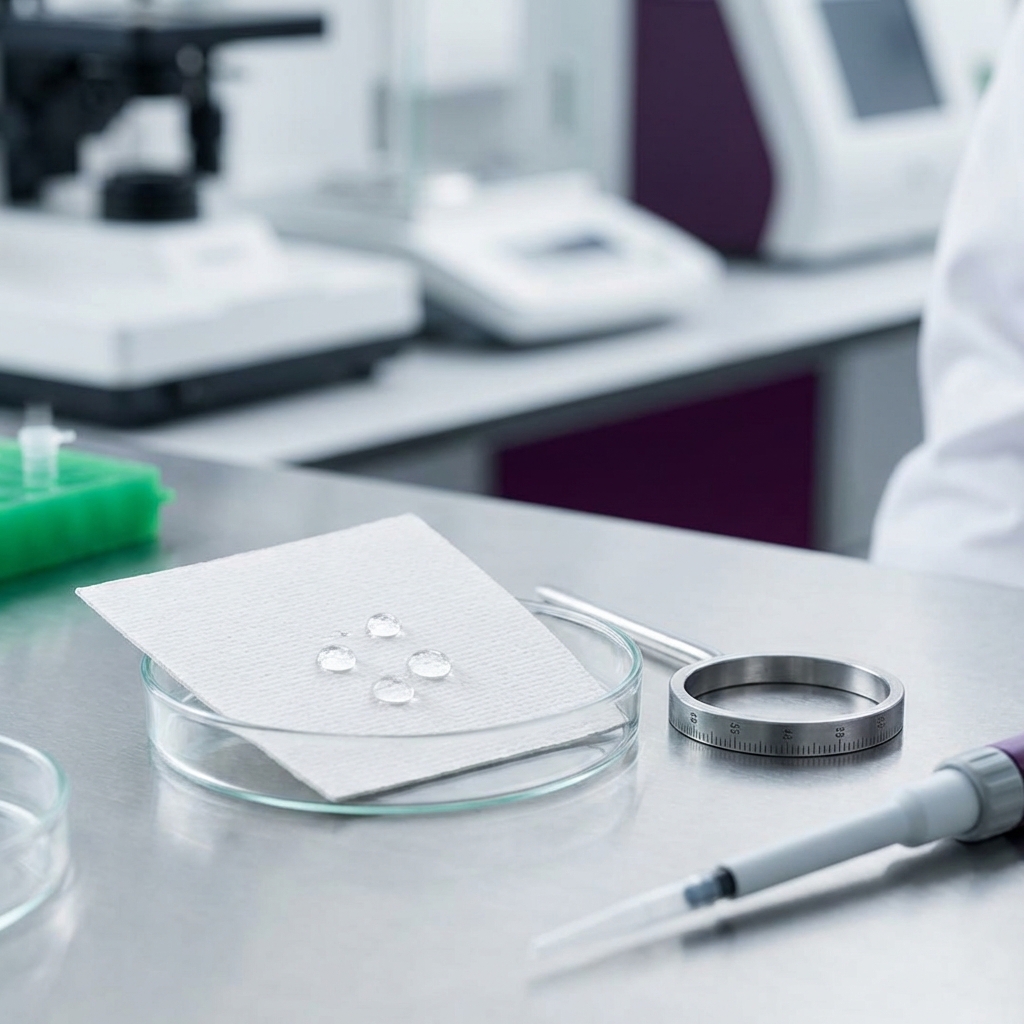
The Cobb test is a standardized method for determining the quantity of water absorbed by the surface of paper, board, or corrugated fiberboard in a specified time. The result is expressed in g/m². According to TAPPI T 441, it is applicable to non-bibulous materials.
Quality Control
Verifies that the material meets water resistance specifications.
Coating Optimization
Helps evaluate the efficacy of water-based coatings.
Problem Prevention
Detects risks of deformation or loss of strength due to moisture.
Regulatory Compliance
Ensures compliance in regulated sectors such as food packaging.
Required Materials (TAPPI T 441)
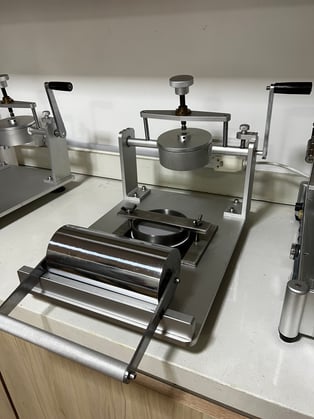
- Cobb Test Equipment (100 cm² metal cylinder)
- Metal Roller (10 kg, 20 cm width)
- Blotting Paper (new for each test)
- Precision Stopwatch
- Precision Balance (0.001 g)
- Distilled or Deionized Water (23 ± 1 °C)
- Graduated Cylinder (100 ml)
How to Perform the Cobb Test Step by Step
- 1
Conditioning
Condition samples in a standard atmosphere. Cut 12.5 x 12.5 cm samples.
- 2
Initial Weighing
Weigh each dry sample with 0.01 g precision.
- 3
Mounting
Place the sample on the rubber mat and secure the metal cylinder on top.
- 4
Adding Water
Pour 100 ml of water at 23°C and start the stopwatch immediately.
- 5
Exposure
Wait for the standard time (120s for paper, 1800s for corrugated board).
- 6
Water Removal
10s before the time ends, pour out the water. Remove the cylinder.
- 7
Drying
Place the sample between two sheets of blotting paper and pass the roller once back and forth.
- 8
Final Weighing
Weigh the wet sample immediately.
- 9
Calculation
(Final Weight - Initial Weight) x 100 = Cobb (g/m²).
-1.png?width=566&height=683&name=Medicion-de-la-Resistencia-al-Agua-del-Papel-Metodo-Cobb%20(1)-1.png)
Interpretation of Results
Factors Influencing Accuracy
- Constant water temperature (23 ± 1 °C)
- Uniform roller pressure (no extra force)
- Blotting paper quality (always new)
- Strictly respecting timing
- Prior conditioning of samples
Need to calculate your Cobb results?
Download our free Excel calculator with automatic formulas, interpretation table, and step-by-step guide.
Conclusion
The Cobb test is essential for evaluating water resistance. Following the TAPPI T 441 standard ensures reliable results to optimize your sustainable packaging.
Do you want to optimize your coatings?